Projects
 Causas de RaizThe citizen map of environmental conflicts in Portugal
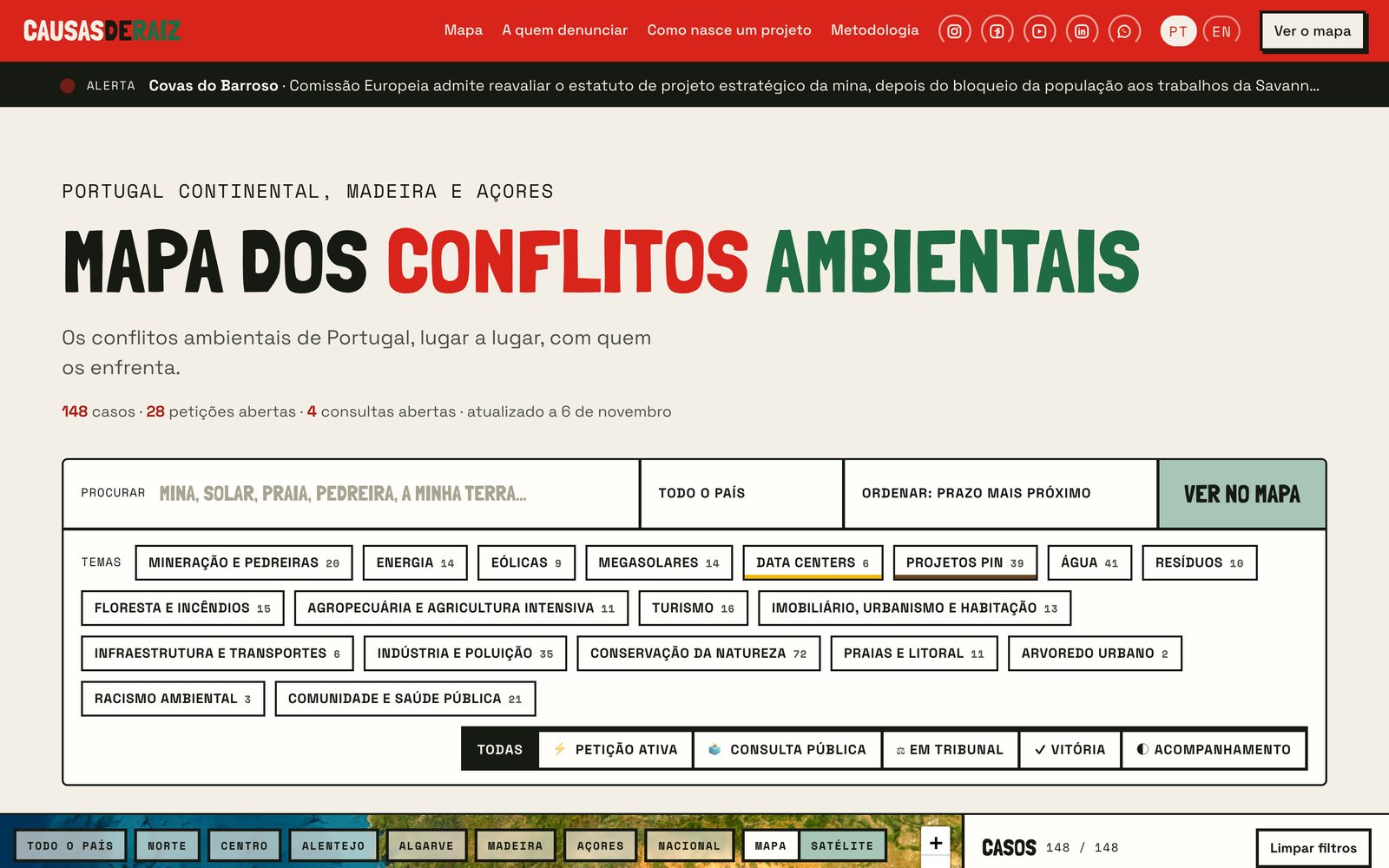
More than 140 environmental conflicts across mainland Portugal, Madeira and the Azores, place by place: mines, dams, solar megaprojects, landfills, resorts and forest clearing.
Each case shows what is at stake, who is resisting and where to take part: petitions by local groups and public consultations before they close.
See it live ↗
 protestos.netThe radar of struggles and protests in Portugal and Spain
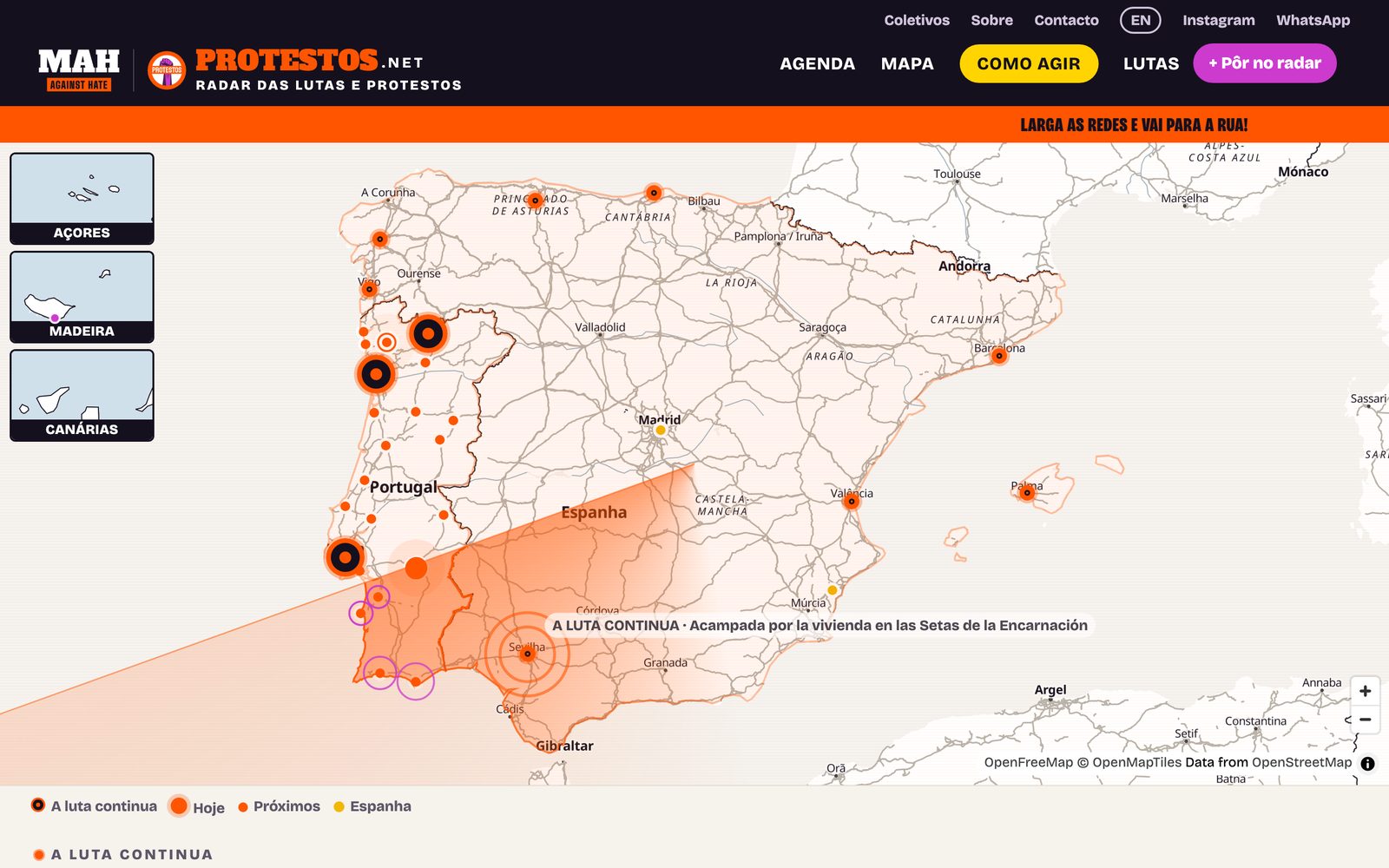
Demonstrations, strikes, people's assemblies and encampments on a map and in a calendar, with the time, the place and the group that calls them.
In How to act, the rights of people who protest, with the law explained simply. Any group can put its struggle on the radar.
See it live ↗
 Movement Against HateStruggles told from the side of those in the street

Posters, posts and videos on housing, land, anti-racism and police repression, in black and white, orange and purple.
Made with protestos.net.
See on Instagram ↗
 Pão da SãoNaturally fermented bakery in Vimieiro

Bread of flour, water and salt, naturally fermented, with no chemical raising agents.
Flour from Portuguese millers, ground between millstones, in a bakery in Vimieiro, in the Alentejo.
See it live ↗
 Tubérculo Coming soonA school of digital autonomy

A school of digital autonomy and presence for businesses and communities.